Encuentra de forma automática horarios semanales para centros educativos de cualquier tipo y complejidad. Orientado a colegios, institutos de enseñanza secundaria, bachillerato, centros de formación profesional, educación superior, universidades, facultades, escuelas de arte, conservatorios de música, etc.
Ofrecemos servicio a cada usuario a través de un software de calidad. Nuestro equipo te acompañará hasta la obtención de la solución para tu horario, con la experiencia de más de 25 años ayudando a miles de centros de enseñanza de todo el mundo.
Organiza el horario para que cumpla tus requisitos y se optimice con tus criterios. Busca y encuentra un compromiso que permita (1) incrementar el rendimiento de los alumnos, (2) mejorar el aprovechamiento de las aulas, y (3) ofrecer mayor satisfacción al profesorado en su trabajo.
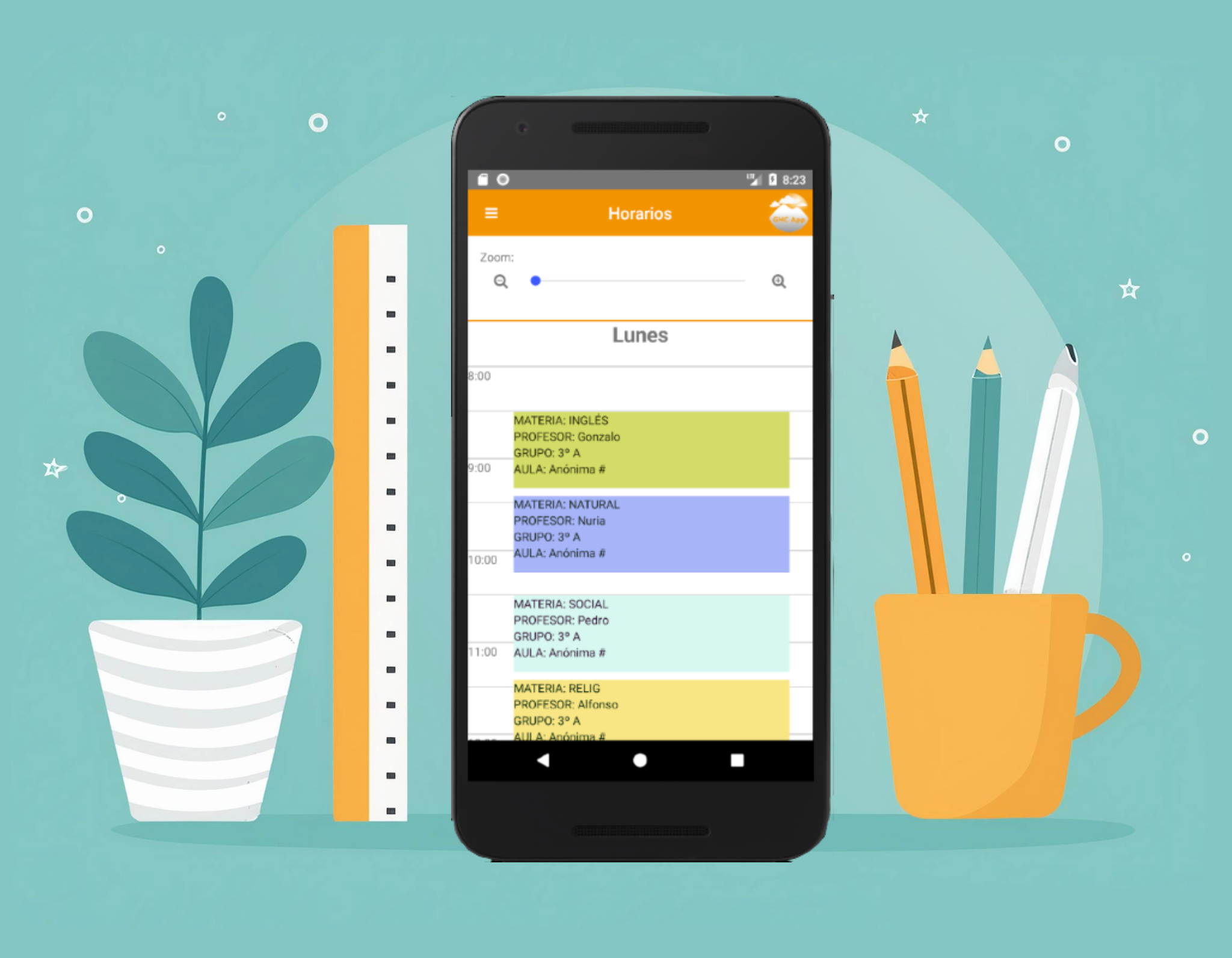
Utiliza nuestra aplicación web y móvil para colaborar en la elaboración y la gestión del día a día del horario. Publica y visualiza los horarios sobre el calendario con GHC App, gestiona las ausencias y suplencias del profesorado y genera informes de desempeño laboral.

GHC es tan sencillo de manejar que no tendrás que ser un experto en informática para hacerlo.

El motor es muy eficaz y obtiene resultados de forma rápida y automática gracias a la inteligencia artificial de GHC.
La optimización del horario observa tus preferencias y criterios para obtener la mejor solución para tu centro de enseñanza.

Puedes modificar el horario de clases para presentarlo en diversos formatos y transferirlo a gestores académicos, tanto públicos como privados.

La suscripción de GHC incluye atención al usuario, tanto del manejo del software como del asesoramiento sobre tus horarios en particular.

En Peñalara Software mantenemos un compromiso constante con nuestros usuarios actualizando nuestro programa continuamente.

GHC App está disponible a través de distintos perfiles: administrador, profesor y alumno. Podrás publicar y compartir el horario sobre el calendario, gestionar ausencias y sustituciones, generar informes entre fechas o delegar en los departamentos la recogida de datos y asignaciones para elaborar los horarios.
Beyond function, links carry narrative weight. They form the scaffolding of associative thinking: following a chain of links is a way of thinking—serendipitous, non-linear, often recursive. The “special 26 link” thus becomes a motif of navigation: a curated path promised to yield something framed as special—a discovery, a secret, a reward. Put together, the phrase highlights an enduring tension: who curates the archive, and who gets to access “special” things? Digital indices are not neutral; corporate platforms, algorithms, and social norms shape what becomes discoverable. A “special 26” designation could be commercially motivated (feature packages, limited editions), algorithmically produced (top-26 lists), or socially emergent (meme clusters).
This raises questions about provenance and trust. Who maintains the index? By what criteria do items qualify as “special”? The index performs an act of naming—by grouping items under a label, it confers significance. But that significance is contingent, contingent on the indexer’s perspective, on the platform’s incentives, and on the social uses that sustain the label. “Special 26” reads like a cipher: evocative but opaque. It could be a model number, a secret roster, a cultural reference, or a playful tag. The number 26 itself carries resonances—26 letters of the Latin alphabet, a complete set that suggests wholeness or a coded alphabet. Appended with “special,” it becomes an insider’s badge: a criterion that separates “ordinary” from “notable.” index of special 26 link
This aesthetic plays out across media: in mixtapes and playlists, in limited-run fashion drops, in fandoms’ ranked rosters. The “special 26 link” promises both completion and exclusivity: a definitive doorway into a chosen world. If one stumbles upon such an index and its link, prudence matters. Links can be conduits for value and for harm. Curatorship implies responsibility—to be transparent about selection criteria, to avoid deceptive scarcity, and to consider who is excluded. Users, for their part, should interrogate provenance and context: does the label signal genuine curation or mere marketing gloss? Beyond function, links carry narrative weight
The phrase “index of special 26 link” reads like a folded map of meanings—technical jargon, a shard of poetry, and a breadcrumb trail across web culture. Unpacked, it becomes a set of intersecting imaginaries: an index as an organizing principle, “special 26” as a coded identity, and “link” as connection or gateway. Taken together, they invite a meditation on how meaning, authority, and access are constructed in modern networks. I. Index as Authority and Gesture An index does more than point; it orders. In libraries, indices stabilize the sprawling body of knowledge; on the web, indices (search results, directories, sitemaps) adjudicate visibility. To speak of an “index of special 26 link” is to call attention to the mechanisms that decide which nodes in a network are visible and how they are grouped. That index is simultaneously neutral catalog and active gatekeeper: it sets priorities, encodes values, and shapes what users encounter first. Put together, the phrase highlights an enduring tension:
On a societal level, we might ask how to design indices that respect pluralism—allowing multiple “special” lists to coexist, making curatorial criteria public, and ensuring pathways for underrepresented creators to be seen. “Index of special 26 link” is a linguistic fragment that opens into a larger meditation on how we find meaning in abundant spaces. It evokes the human work of naming and grouping, the cultural dynamics of exclusivity, and the technical realities of linking and indexing. Whether read as a technical artifact, a community tag, or a poetic fragment, it reminds us that every act of indexing creates worlds—worlds that include some and omit others, that invite some to follow a link and leave others at the margin.

15176





 Peñalara